Winter motorcycle riding: how to stay safe on UK roads

Riding a motorcycle in winter calls for more planning than a summer journey. Wintery weather and changing road surfaces can reduce grip and visibility.
What this guide covers:
- When to postpone a winter motorcycle journey
- Checks for tyres, brakes, lights and essential equipment
- Practical advice for wet roads, poor visibility and road hazards
Is it safe to ride a motorcycle in winter?
You can ride a motorcycle in winter, but it may not safe in all conditions. Rain and cold weather require extra care. Ice, snow and poor visibility can make a journey too dangerous, even for an experienced rider.
Before you set off on a ride, check the forecast, temperature and likely road conditions along your route. It’s important to note the likely conditions for your return journey before leaving too.
When out on a ride, be cautious around bridges, shaded roads and rural lanes as they can remain icy when more exposed or busy roads appear clear. If ice or snow is forecast or already present, postpone the ride or choose another way to travel.
Key information
- 1 mm most motorcycle tyres must have at least 1 mm of tread
- 2× stopping distances in wet conditions are at least 2x greater than on dry roads
- 10× stopping distances on ice can be ten times greater than on dry roads
Before you set off
A short check before your ride can help you spot problems before they affect your safety. You should always follow the instructions for your particular motorcycle.
- Tyres: inspect tread, wear and damage. Check pressures when the tyres are cold, using the manufacturer’s recommended settings.
- Brakes and controls: make sure the brakes, throttle, clutch and steering operate normally, without sticking or unusual resistance.
- Lights and visibility: check the headlight, rear light, brake light and indicators. Clean the lenses, mirrors and visor.
- Battery, chain and fluids: check for starting problems and follow the service schedule for chain condition, lubrication and fluid levels.
- Journey: check weather and travel information, allow extra time, plan a suitable route and keep a way to contact someone if you break down.
What motorcycle tyre tread and pressure do you need in winter?
Your tyres need to be in good condition and suitable for your motorcycle. In Great Britain, the usual legal minimum for motorcycle tyres is 1 mm of tread across at least three-quarters of the tread width in a continuous band around the tyre. Mopeds must have visible tread. These are minimum legal standards, not a guarantee of grip on wet, icy or cold roads. (Source: Highway Code)
The tyre pressure on your bike should be checked against the manufacturer’s instructions, normally when tyres are cold. Don’t lower or increase tyre pressure simply because it is winter unless the manufacturer instructs you to. If your tyres are damaged, worn or unsuitable for the conditions, arrange professional advice before riding. (Source: DVSA)
How to ride a motorcycle safely in rain
Wet roads can reduce the margin for braking and acceleration. You should reduce speed to suit the conditions, look further ahead and make your braking and steering movements gradual. If possible, you should allow more room before bends and junctions, avoiding sudden changes of direction.
The Highway Code advises that the distance needed to stop in wet weather is at least double that on dry roads. It also advises at least doubling the gap between yourself and the vehicle in front. You should then treat this as a baseline to increase when visibility or grip is especially poor, not a target to ride up to.
Where possible, you should try to brake earlier while the motorcycle is upright. Anti-lock braking systems can help prevent wheel lock in some situations but cannot create grip where the surface offers very little.
Watch for slippery surfaces and standing water
When wet areas on the may offer less grip than the surrounding road, including:
- Road markings
- Metal covers
- Wet leaves
- Loose grit
- Patches of spilled fuel
To keep yourself safe, look well ahead, reduce your speed and avoid sharp braking, acceleration or steering while crossing these areas.
Standing water may also hide potholes and other hazards. You should avoid deep or unknown water rather than assuming it’s safe to ride through. You should leave space from other vehicles so spray doesn’t obscure your view.
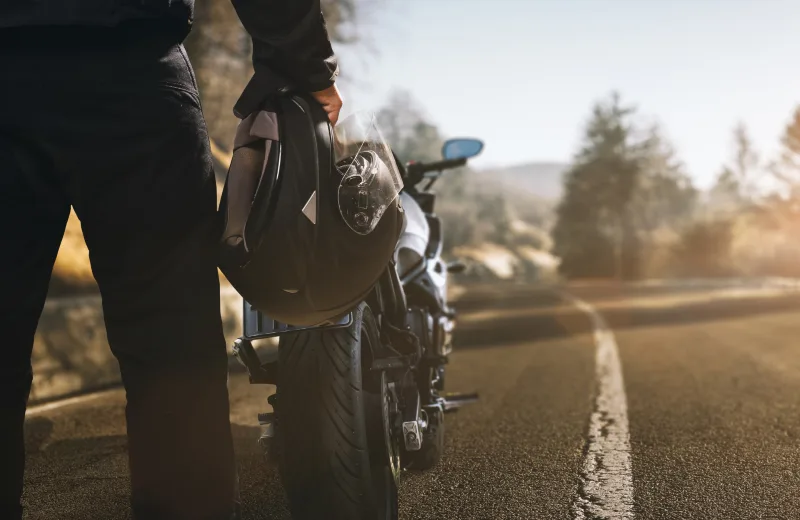
Should you ride a motorcycle on icy or snowy roads?
The safest choice is usually not to ride when wintery conditions are likely on your route. A motorcycle has limited grip when the surface is frozen, and areas of the road may not be safe.
If you do go on a ride, look for:
- Frost
- Untreated side roads
- Slush
- Freezing puddles
- Changing temperatures.
If you hit black ice, don’t rely on a particular riding technique to recover control. If you encounter unexpectedly hazardous conditions, avoid:
- Abrupt actions
- Reduce your speed only as conditions safely allow
- Stop somewhere safe to reconsider the journey.
(Source: The Highway Code)
Cold-weather clothing that supports control
Protective motorcycle clothing should keep you dry, warm and able to operate the controls without restriction.
Heated grips or clothing can help with comfort, but use equipment compatible with your motorcycle and follow the fitting instructions. If your hands become numb, you start shivering or you cannot concentrate, stop safely and warm up before deciding whether to continue.
In Britain, riders and passengers must normally wear an approved protective helmet. Other specialist protective clothing is strongly recommended but is not generally a legal requirement. (Source: Gov.UK)
How to stay visible when riding in the dark or fog
Shorter days can mean commuting in darkness, low sun or fog. You should check your motorcycle’s lighting before travelling and use the lights required for the conditions. Reflective or fluorescent details can help others notice you, but never assume you have been seen, especially at junctions. (Source: The Highway Code)
A clean, clear visor is essential. Use an appropriate anti-fog insert or treatment if needed, and keep it free from road spray and dirt. You should watch for glare from oncoming headlights and leave enough space to respond to a hazard you can actually see.
Other road users have a responsibility to take care around motorcyclists and vulnerable road users.
Winter motorcycle maintenance after a ride
Winter road salt and moisture can build up on the motorcycle. You should follow the owner’s manual for cleaning, lubrication and maintenance and pay particular attention to:
- The chain
- Brakes
- Lights
- Exposed parts
Be sure to check for deterioration before the next ride. If the motorcycle isn’t going to be used regularly, follow the manufacturer’s battery care guidance.
If conditions worsen during your journey
Don’t feel you have to finish a journey simply because you have started it. If conditions make control or visibility uncertain, reduce your speed carefully and find a safe place to stop. Avoid stopping on an exposed bend or somewhere other traffic may not see you.
If your motorcycle falls or suffers damage, check yourself first and keep clear of moving traffic. Don’t ride on if brakes, controls, tyres, lights or steering may be damaged. If possible arrange suitable recovery if necessary.
What does the Highway Code say about winter motorcycle riding?
The Highway Code requires riders to:
- Observe relevant road traffic laws and offers additional safety advice.
- Wear a protective helmet
- Ensure tyres are compliant
- Allow greater distances between yourself and other vehicles
- Wearing high-visibility clothing
- Adapting speed to poor conditions
Plan the ride around the conditions
Winter motorcycling is safest when you make decisions based on the conditions in front of you, not the journey you originally planned. Before setting off, check the weather and the motorcycle and be prepared to change your route or travel another day.




A national team, here when you need us
With offices across the UK, we’re never too far away, helping people access specialist advice and support wherever they are.
Our awards
-

THE TIMES BEST LAW FIRM
-
CHAMBERS TOP RANKED LAW FIRM
-
LEGAL 500 TOP TIER FIRM
-
ARMED FORCES COVENANT
-
AVMA - LAWYERS’ SERVICE MEMBER
-
HEADWAY ACCREDITED SOLICITORS
-
SIA - TRUSTED LEGAL PARTNER
-
CBIT - TRUSTED LEGAL PARTNER










Start your claim with confidence
Not sure where to start? We’ll listen, guide you, and give clear, honest advice on what to do next.